
Borrow or Pay Cash? Start With Your Monthly Cash Flow
Before comparing interest rates or loan offers, there is a more basic question: where would the money come from each month? Borrowing makes it possible to pay for something now with income that has not yet arrived, and that is the reason cash flow comes first.
Key takeaways
- Borrowing pulls future cash flow forward, so the first question is whether future income can support the payment comfortably.
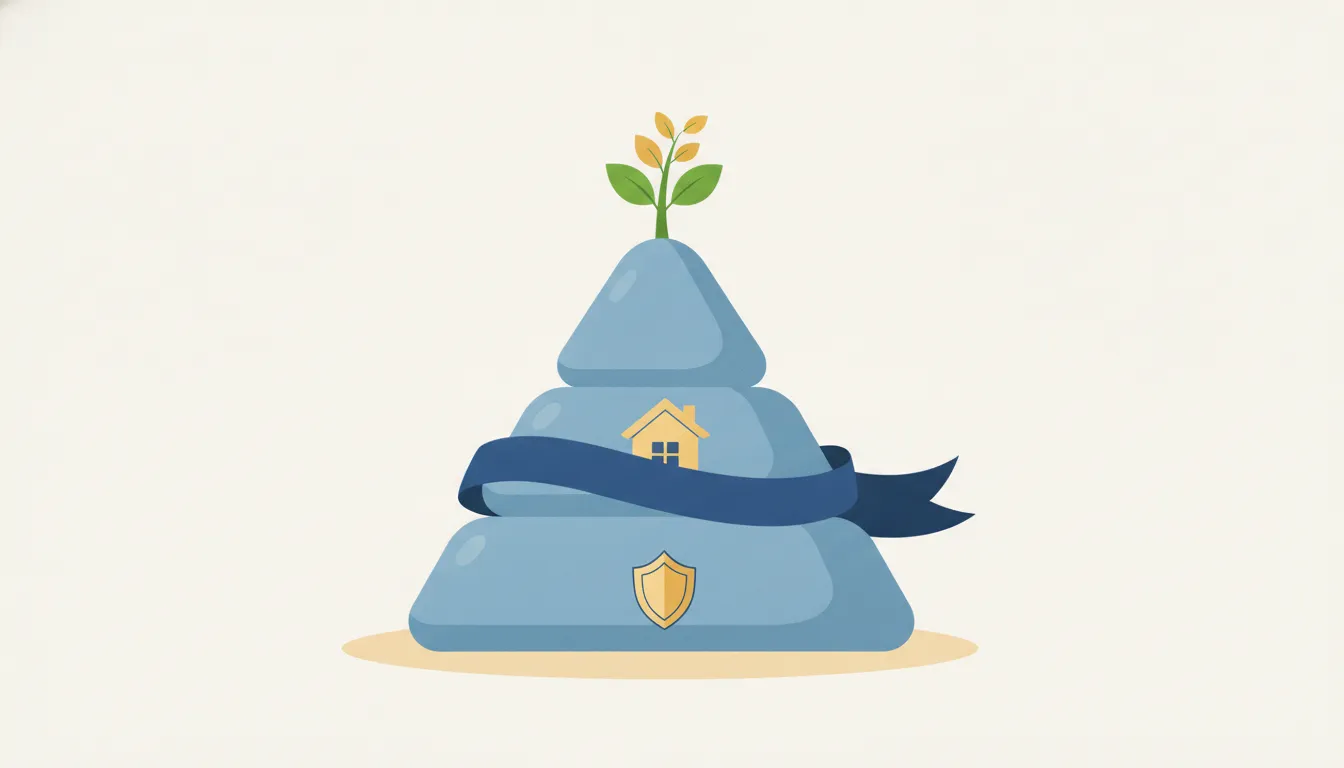
- A three-layer picture of protection, monthly cash flow and long-term wealth shows where a loan payment fits.
- A debt-to-income ratio, which divides monthly debt payments by gross monthly income, is one common way lenders and households measure payment pressure.
- Borrowing for something that loses value costs interest on a shrinking asset, while borrowing for something that may hold value carries risk in both directions.
- Keeping a cushion for surprises helps prevent a financed purchase from turning into a larger problem.
Borrowing pulls future cash flow forward
When someone borrows, they are agreeing to hand over a portion of future income in exchange for having something today. That can be a sensible trade for a necessity or a purchase that holds its value. It is less comfortable when the payment competes with other commitments, or when the thing bought loses value while the interest keeps adding up.
A simple model can help show where the pressure comes from. Think of it as three layers.
A three-layer picture
The base layer is protection. These are the resources that guard against losing what you have: insurance, an emergency cushion, and money set aside for things that cannot be postponed. The Consumer Financial Protection Bureau describes an emergency fund as cash set aside for unplanned expenses.
The middle layer is monthly cash flow. This is the money coming in and going out each month: income, housing, food, transportation, debt payments and everything else. Spending exactly what comes in leaves nothing. Spending more means borrowing to cover the difference.
The top layer is longer-term wealth. When cash flow leaves something over, that surplus can be saved or invested, where it can support later spending or be passed on.
A home touches all three. The payment comes from monthly cash flow, the insurance and reserves protect it, and the equity may become part of long-term wealth, although the value of a home can rise or fall.
A worked budget
Imagine a household with $6,000 in monthly take-home pay. Rent or housing, utilities, food, insurance, transportation and minimum debt payments already add up to $4,500, which leaves $1,500.
Now imagine a purchase that would add a $400 monthly payment. That leaves $1,100. The question is not just whether $1,100 is positive. It is what the household also needs that money for: a car repair, medical bills, savings, or a gap in income. If those pressures are already visible, the new payment may feel heavier than the math suggests.
A common shorthand for payment pressure is the debt-to-income ratio. The Consumer Financial Protection Bureau explains that it is total monthly debt payments divided by gross monthly income. For example, $2,000 in monthly debt payments against $6,000 in gross income would be 33 percent. The CFPB notes that creditors set their own guidelines, and what one accepts another may not.
What is being bought matters
A second layer of the question is the item itself. Borrowing for something that quickly loses value, such as a piece of electronics or a vacation, means paying interest on something that is shrinking. Borrowing for something that may hold its value, such as a home, carries risk in both directions, since values can rise or fall and ownership brings its own costs.
Neither category makes borrowing right or wrong. It simply changes what the household is exposed to if cash flow tightens.
Questions that shape the choice
- What would the payment be, and how much would be left each month after it?
- If I paid cash instead, how long would it take to rebuild my cushion?
- What interest would I pay over the life of the loan, and what could that money do otherwise?
- What happens to the plan if income drops for a few months?
- Is the purchase something I would still want, and be able to keep, if money got tighter?
The answers don't point to one correct choice. They show what each option demands of the household, and that is often the clearest way to decide.
Common questions
How do I decide whether to borrow or pay cash for something?
Start with monthly cash flow: what comes in, what is already committed, and what a new payment would leave. Then consider the cost of borrowing, what the purchase is, and what cushion would remain.
What is a debt-to-income ratio?
It is your total monthly debt payments divided by your gross monthly income, usually shown as a percentage. The Consumer Financial Protection Bureau describes it as a way to see how much of your income goes to debt payments.
Does borrowing to buy a home work the same way as borrowing for other purchases?
In one respect yes, since both use future income to pay for something now. The difference is that a home may hold or gain value but can also fall, and it adds costs such as taxes, insurance and maintenance.
Explore your next step
Sources and further reading
From the Borrow Smart newsletter
NIFE provides general financial education. LendsightAI and Debt Done Date are separate for-profit partners; optional services may have a fee.