
Gains and Costs: Weighing Both Sides Before You Borrow
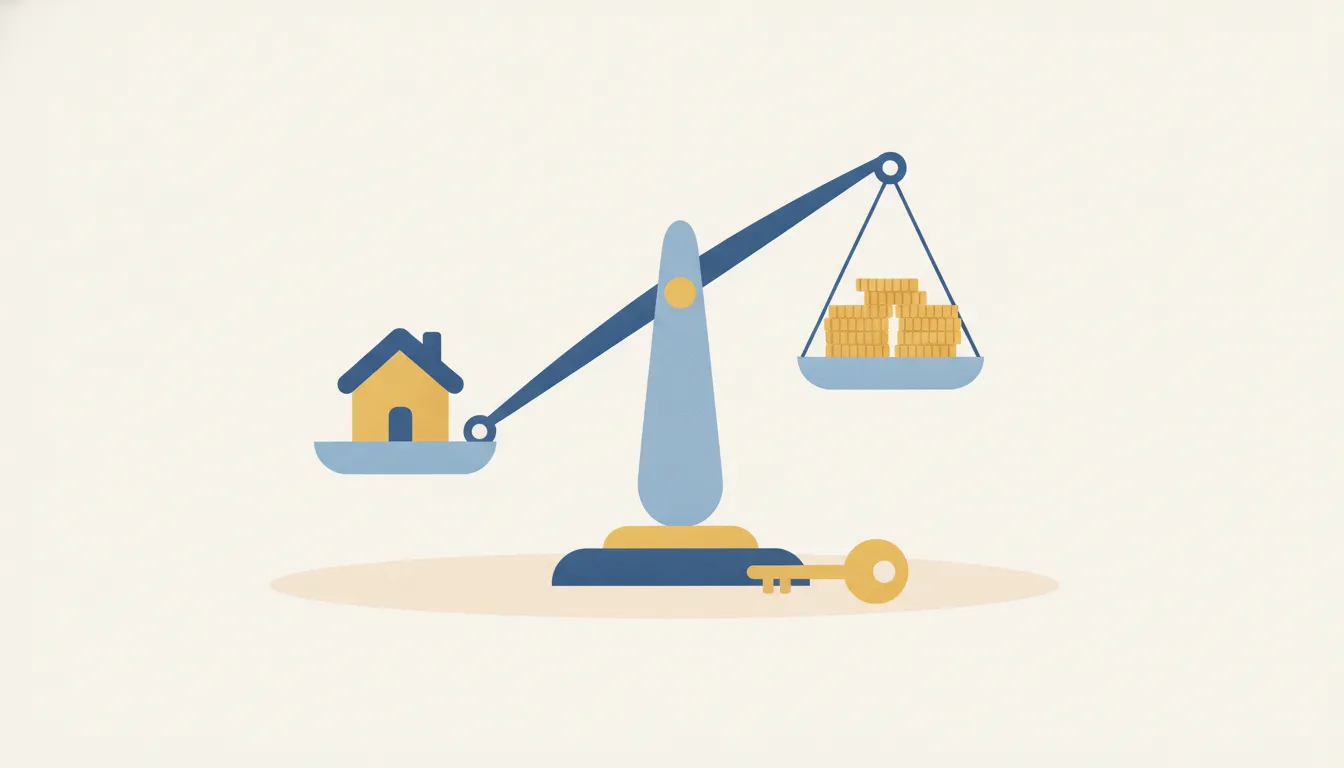
When a lender or a friend describes a loan, the first thing mentioned is usually the gain: a lower payment, a bigger home, cash in hand. The costs tend to show up later. A simple habit can balance this out, which is to write both columns before deciding and then ask four questions about the loan itself.
Key takeaways
- Every borrowing decision has a gain column and a cost column, and looking at only one of them leaves out half of the picture.
- In a hypothetical refinance, a monthly payment about $352 lower came with a balance about $17,800 higher after five years.
- Keeping the original number of years left on a loan can change the same refinance from higher lifetime interest to lower lifetime interest.
- A lender's approval amount measures what the lender will allow, which is a different question from what a household can comfortably repay.
- Four questions about the loan's structure, the repayment plan, the amount available and the amount chosen can organize almost any borrowing decision.
Every yes carries a hidden no
A financial decision works like a ledger. One column lists what you get. The other lists what it costs, including costs that arrive later or never appear on a monthly statement.
The costs have two kinds. Some are direct, such as fees, interest and a larger balance. Others are what you give up. Money committed to a new payment is not available for a cash cushion, other debt or another goal. Saying yes to one use usually means saying no to another.
Looking at only one column is easy because the gain is usually the one being advertised.
A refinance ledger, worked through
Consider a hypothetical household with $270,000 left on a mortgage at 7 percent and 22 years remaining. The payment of principal and interest is about $2,007. It is offered a new 30-year loan at 6 percent, with $6,000 in closing costs added to the loan, for a total of $276,000.
- The gain: the payment falls to about $1,655, roughly $352 less each month.
- A cost: after five years, the balance on the old loan would be about $239,100, while the new loan's would be about $256,800. That is about $17,800 more still owed.
- A cost: the interest still to be paid over the full remaining life is about $259,900 on the old loan and about $319,700 on the new one, roughly $59,800 more.
Now change one input. If the same household took the new rate but kept 22 years, the payment would be about $1,885, only $122 lower than today. Interest over the life of the loan would be about $221,700, which is roughly $38,200 less than the old loan.
The rate was the same in both versions. What changed the ledger was the term. The example leaves out property taxes, insurance and what the household would do with the monthly savings, and its rates and costs are illustrations, not quotes. The point is that the gain and the cost can move in opposite directions.
The Consumer Financial Protection Bureau describes the trade-off in the same terms for loans advertised as having no closing costs. The lender may charge a higher rate or add the costs to the loan, and the agency notes that a higher rate means paying more over time, while a higher loan amount increases payments and reduces equity.
Four questions to ask before borrowing
Once the ledger is open, four questions can organize the rest.
- What kind of loan is it, and what risk comes with it? Look past the rate to the structure. The CFPB's key terms page notes that with an adjustable-rate mortgage the rate and payment can increase substantially. It also explains that the security interest is what lets a lender foreclose if the loan is not repaid. A loan secured by the home puts the home at stake.
- How will it be repaid? A payment that depends on hoping income will cover it is not a plan. It helps to write down the monthly payment next to current cash flow and ask what happens if income dips for a few months.
- How much is available? The amount a lender will offer is a ceiling set by its criteria. The CFPB says the debt-to-income ratio, which divides monthly debt payments by gross monthly income, is one way lenders measure your ability to manage the payments. It measures the lender's comfort, which may differ from the household's.
- How much is the right amount to borrow? The answer depends on the first three, and it is rarely the maximum. A larger amount raises the total cost and leaves less room if circumstances change.
Compare offers on the same footing
When more than one lender is involved, the CFPB's advice is to request multiple Loan Estimates from different lenders so offers can be compared on the same form. Setting the payment, the balance after a few years, the total cost and the fees side by side is the ledger approach in practice.
A short exercise
Pick one decision that has been on hold. Write the gain on the left and the cost on the right, in plain terms and in dollars where possible. Add what the money would do elsewhere, then answer the four questions. The result is not a verdict. It simply makes sure both columns were read before the decision was made.
Common questions
How do I compare the pros and cons of a loan?
List the gains and the costs side by side, including costs that arrive later, such as a larger balance or more total interest. Then add what the money could have done elsewhere, since choosing one use means giving up another.
Is the amount a lender approves the right amount to borrow?
Not necessarily. The Consumer Financial Protection Bureau describes the debt-to-income ratio as one way lenders measure your ability to manage the payments, which reflects the lender's view. Your own budget, goals and cash cushion are separate parts of the picture.
Does a lower payment mean a refinance saves money?
Not always. A lower payment can come from a longer term, from a lower rate, or both, and a longer term or added closing costs can raise the total paid over time. Comparing the balance and total interest alongside the payment shows the fuller picture.
Explore your next step
Sources and further reading
From the Borrow Smart newsletter
NIFE provides general financial education. LendsightAI and Debt Done Date are separate for-profit partners; optional services may have a fee.