
Inverted Yield Curve: What It Means and What It Doesn't
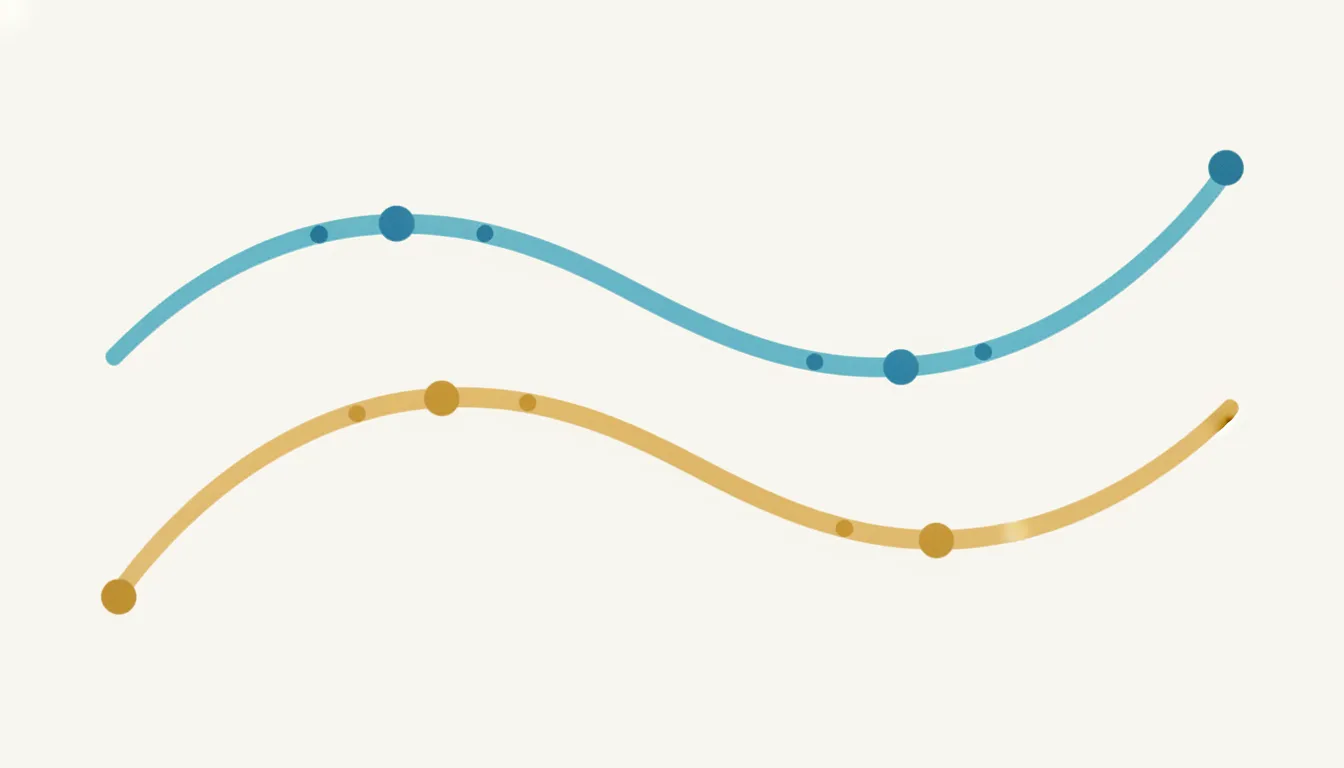
Every so often a headline announces that the yield curve has "inverted." The phrase sounds technical, and it often arrives alongside talk of recession. Understanding what it actually describes helps put the news in proportion.
Key takeaways
- A yield curve compares what the government pays to borrow for short periods with what it pays to borrow for long periods.
- The curve is inverted when short-term yields are higher than long-term yields, which is the reverse of the usual pattern.
- Inversions have often appeared before recessions, but Federal Reserve economists caution against reading them as independent predictions.
- Mortgages and other long-term loans tend to follow longer-term yields, while many variable-rate products follow short-term benchmarks.
- A headline about the curve says little about any one household, so a personal budget and cushion are usually more useful to examine.
What a yield curve is
When the government borrows, it sells securities that mature at different times, from a few months to 30 years. Each has a yield, which is the return an investor earns at the current price. A yield curve plots those yields from shortest to longest.
Normally the line slopes upward. A lender who ties money up for ten years usually asks for more than one who lends for six months, because more can change over a longer period.
What "inverted" means
The curve is inverted when that pattern flips, and short-term yields are higher than long-term ones.
A simple everyday comparison helps. Suppose a bank offered 5% on a six-month certificate but only 4% on a five-year certificate. Here the shorter commitment pays more, which is unusual. That would be a small version of the same idea.
Why does it happen? In general, investors who expect rates to fall in the future may rush to lock in today's long-term yields, which pushes those yields down. At the same time, short-term yields can be held up by central bank policy. The result is a curve that dips as it moves to the right.
Why it gets attention, and why economists add caveats
Inversions have often appeared before recessions. The Federal Reserve Board has noted that certain yield spreads have regularly inverted, or come close to it, in advance of downturns.
The same Board note urges caution. Its authors state that it is not valid to interpret inverted spreads as independent measures of an impending recession, since the curve largely reflects the expectations investors already hold. They also point out that spreads can move for other reasons, such as expectations about inflation or the level of rates, and that a recession that followed an inversion in 2019 was caused by an unexpected event, not by the curve.
In short, the curve can be a useful clue about what markets expect. It is not a forecast of the economy, and it is not a forecast of any household's finances.
What it can mean for borrowers and savers
For households, the curve is most useful as context:
- Fixed-rate mortgages. Rates on long-term loans tend to move in the same direction as longer-term yields. A fixed rate that is already set will not change.
- Variable-rate debt. Many credit cards and some other loans follow short-term benchmark rates, which are influenced by central bank policy. A payment on such a loan can change when those benchmarks move.
- Savings. When short-term rates are high, deposit accounts and short-term certificates may pay more than they did before, though what a particular bank offers varies.
- Loans coming up for reset. A borrower whose adjustable loan is about to reset may face a payment very different from the one they have now.
Turning a headline into a check-up
Rather than guess where the economy is heading, many households find it more useful to look at their own position:
- Which of my debts are fixed, and which can change?
- If my income dropped for a few months, how long could my cash cushion cover essential bills?
- Do any of my loans reset soon, and what would the new payment be?
A phrase like "inverted yield curve" will keep appearing in the news. A budget that can handle a range of outcomes is a calmer response than trying to read the curve like a crystal ball.
Common questions
What is a yield curve?
It is a line that plots the yields on government securities of different lengths, from a few months to many years. Normally, longer maturities pay more because lenders are tying up money for longer.
Does an inverted yield curve mean a recession is coming?
Not necessarily. Inversions have often come before recessions, but Federal Reserve economists note that the curve reflects investors' expectations and shouldn't be treated as an independent prediction. Timing and causes vary.
Does an inverted curve affect my mortgage?
It can be relevant to where long-term rates are heading, but a fixed-rate mortgage you already have does not change. A variable-rate loan may move depending on the benchmark it follows.
Explore your next step
Sources and further reading
From the Borrow Smart newsletter
NIFE provides general financial education. LendsightAI and Debt Done Date are separate for-profit partners; optional services may have a fee.